Southwestern lẩu mắm: picking vegetables, ordering a pot, and enjoying it on a road trip
04-10-2026 22:51:07
MEMBER SUPPORT 0367 494 919 Send feedback by email
Passing through the Quảng region, a bowl of mì is worth considering when you want to stop, eat and rest. The broth does not submerge the noodles, the topping sits on top, and the herbs and rice crackers are eaten in whatever way you like. Don't rush to find a so-called most authentic version: taste the topping broth, add a little herbs, break off a piece of rice cracker, and discover the bowl in front of you for yourself.
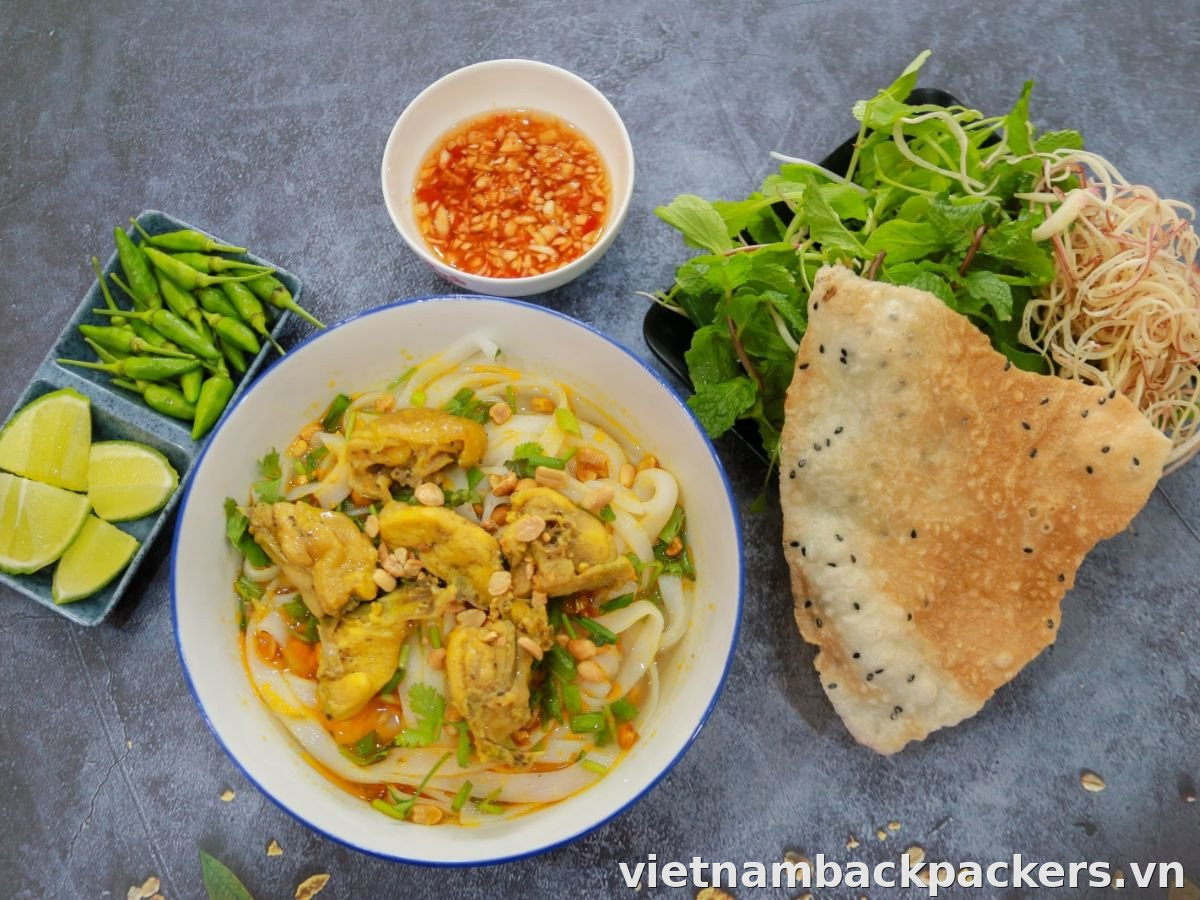 Chicken topping: ask about the meat portion and amount of bone
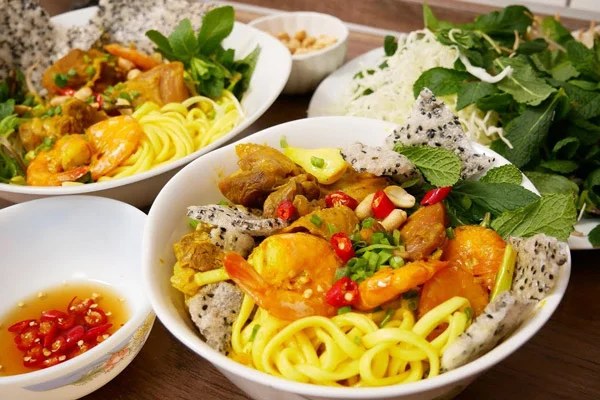
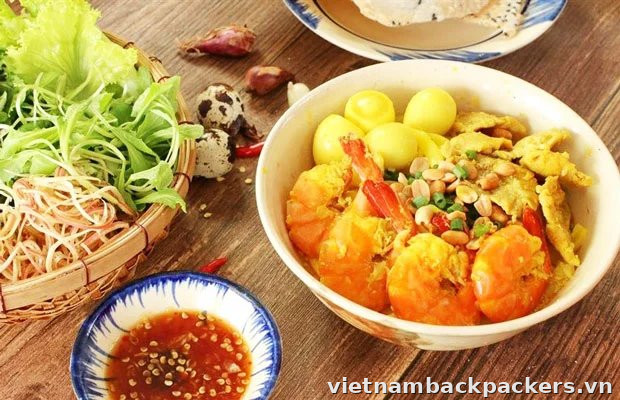 Shrimp and pork: many textures in one bowl
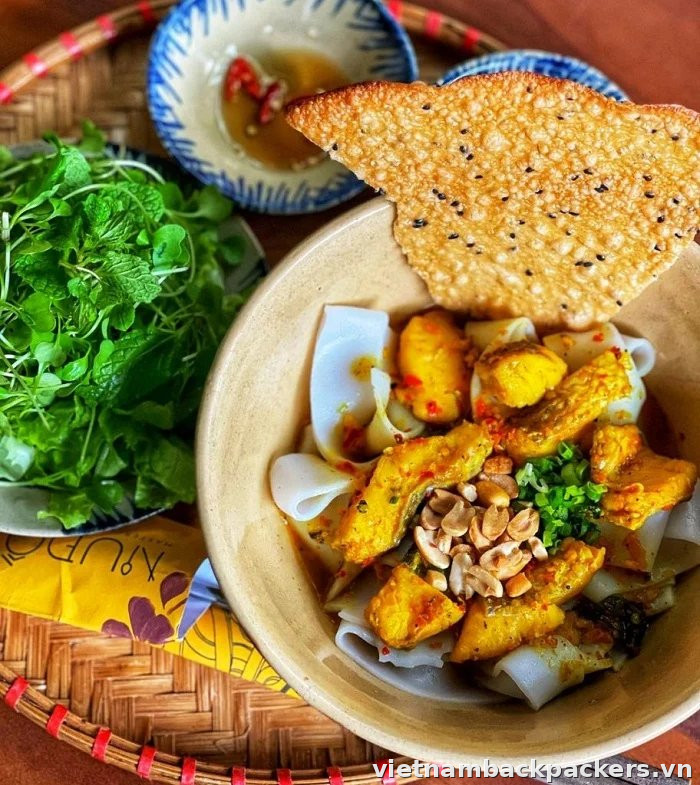 Fish topping: an option depending on the menu
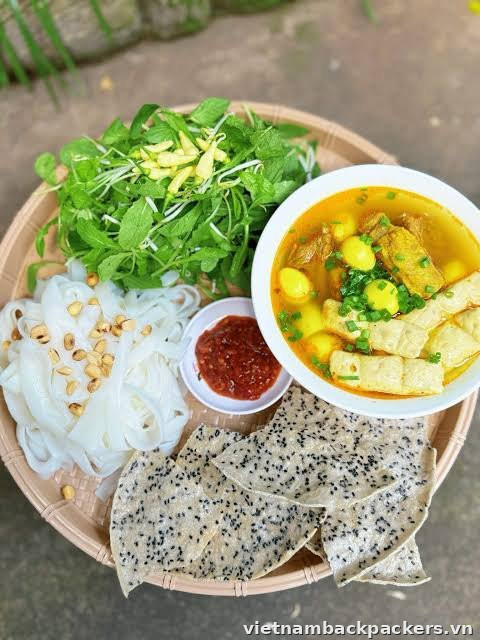 Herbs and peanuts: add to taste and preference
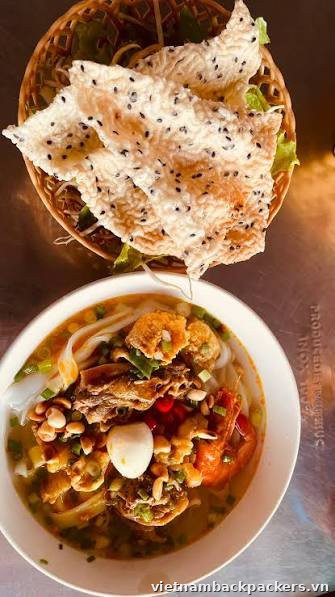 Sesame rice cracker: break off a little at a time to keep it crispy
If you pass through Đà Nẵng or Hội An, trying a bowl of mì Quảng is a chance to understand the flavour of the Quảng region better. You don't need to find one single topping considered the only correct one: the fun lies in how the noodles, topping broth, herbs and crunchy parts come together in the bowl.

Mì Quảng is tied to the food culture of the Quảng region in central Vietnam. When passing through Đà Nẵng or Hội An, you might set aside a meal to try the dish. Shrimp and pork, chicken or another kind of topping will each bring their own way of experiencing the noodles and topping broth.
A bowl usually has rice noodles, the topping, a relatively small amount of broth or topping broth, served with herbs, roasted peanuts and grilled sesame rice crackers. The cook can vary the meat, shrimp, fish, seasonings and presentation, so two bowls with the same name may not be completely alike.
The easily recognisable feature is that the dish does not rely on a large amount of broth covering all the noodles. The rich taste of the topping broth and its accompanying ingredients means each time you mix or pick up a bite, the flavour ratio can differ.
The name might make those unfamiliar think of noodles made from wheat. However, the familiar mì Quảng noodles are made from rice. When eating, notice the width of the noodle and how soft or firm it is; that is part of what helps you sense the differences between bowls at different shops.
The noodles are usually fairly wide, feeling soft with a firmness that depends on how they are made. You might encounter white or yellow noodles; don't consider the yellow colour a requirement for the dish to be called mì Quảng. Turmeric may add colour and aroma in some preparations, but recipes are not the same across every kitchen.
If you need to strictly avoid gluten, the information that the noodles are made from rice is still not enough. Ask about the ingredients of the specific noodles, the seasonings, sauces, and the possibility of shared utensils. A common characteristic of the dish is not a guarantee of ingredients at every shop.
Topping broth is a term you may hear when talking about the liquid that comes with the topping and noodles. Instead of a bowl full of broth to sip like many noodle soups, mì Quảng usually uses just enough to moisten and carry flavour to the ingredients.
The topping contributes meat, shrimp or other ingredients along with seasonings; the herbs and rice crackers add textures that are not in the broth. With a light mix, a little rich broth can coat the noodles, so each bite combines soft, fresh, rich and crunchy elements.
The amount of broth and its richness vary by shop. You don't need to expect every bowl to have one fixed amount of broth. If you want more broth or less richness, ask whether the shop can adjust; that is a matter of personal taste, not fixing a bowl that was cooked wrong.
Don't rush to add lots of fish sauce or soy sauce when the bowl first arrives. Tasting first helps you know whether the topping broth is already salty, spicy or rich enough for you, especially when you still intend to mix in herbs and rice crackers afterwards.
Mì Quảng gà is an easy choice to picture if you like chicken. The cut of meat, the amount of bone and how it is cooked depend on the shop; don't assume every chicken bowl is boneless or low in fat.
If travelling with young children or you don't like gnawing on bones, ask about the meat before ordering. You can choose a different topping if the shop has no serving option suited to that need.
Shrimp and pork create two kinds of texture in the same bowl. This is worth trying if you want to experience many ingredients, but ask what kind of “meat" it is and what exactly the topping includes. Some bowls may add egg or other ingredients; not every shop combines them the same way.
Those allergic to shrimp should not consider picking out the shrimp enough: the shrimp may have already added flavour to the topping broth and touched the other ingredients. Discuss this before the shop prepares the dish.
Mì Quảng toppings come in many options, from chicken and shrimp to pork and fish. The menu where you stop may offer a different direction to try from the bowl you're used to at home. Look at the toppings on offer and choose what you like; if you order the “special", you should know in advance what it includes.
If you just want to start with an easy-to-understand choice, order one main topping. Once you're familiar with the noodles and topping broth, trying a different kind at the next meal will help you notice differences more than cramming every type into one bowl.
The accompanying herbs make each bite of noodle less monotonous and add aroma. Depending on the shop, you might encounter aromatic herbs, sliced banana flower or other greens. Don't assume the plate of herbs has the same components everywhere.
Roasted peanuts add richness and a crunchy texture. Grilled sesame rice crackers bring a different kind of crunch: you can break them into small pieces to eat in between bites or put a little into the bowl. Keeping part of the rice cracker aside keeps it crunchy longer than putting it all into the broth from the start.
If you don't like a lot of herbs, start with a small amount then add more. If you're allergic to peanuts or sesame, say so beforehand; asking not to sprinkle them on top is not enough if that ingredient is already in the seasonings, oil or prepared together.
Raw herbs also need to be properly cleaned and handled. If you don't want to eat them raw, ask whether the shop can blanch them or offer another option. A bowl of mì with little hot broth is not a reliable environment for cooking a whole plate of herbs yourself.
You can try a simple sequence:
This is a suggestion to get started, not a required ritual. Some people like to mix a lot, others keep the components relatively separate. What matters is finding the ratio that suits you and enjoying it while the noodles, topping and herbs are still in a pleasant state.
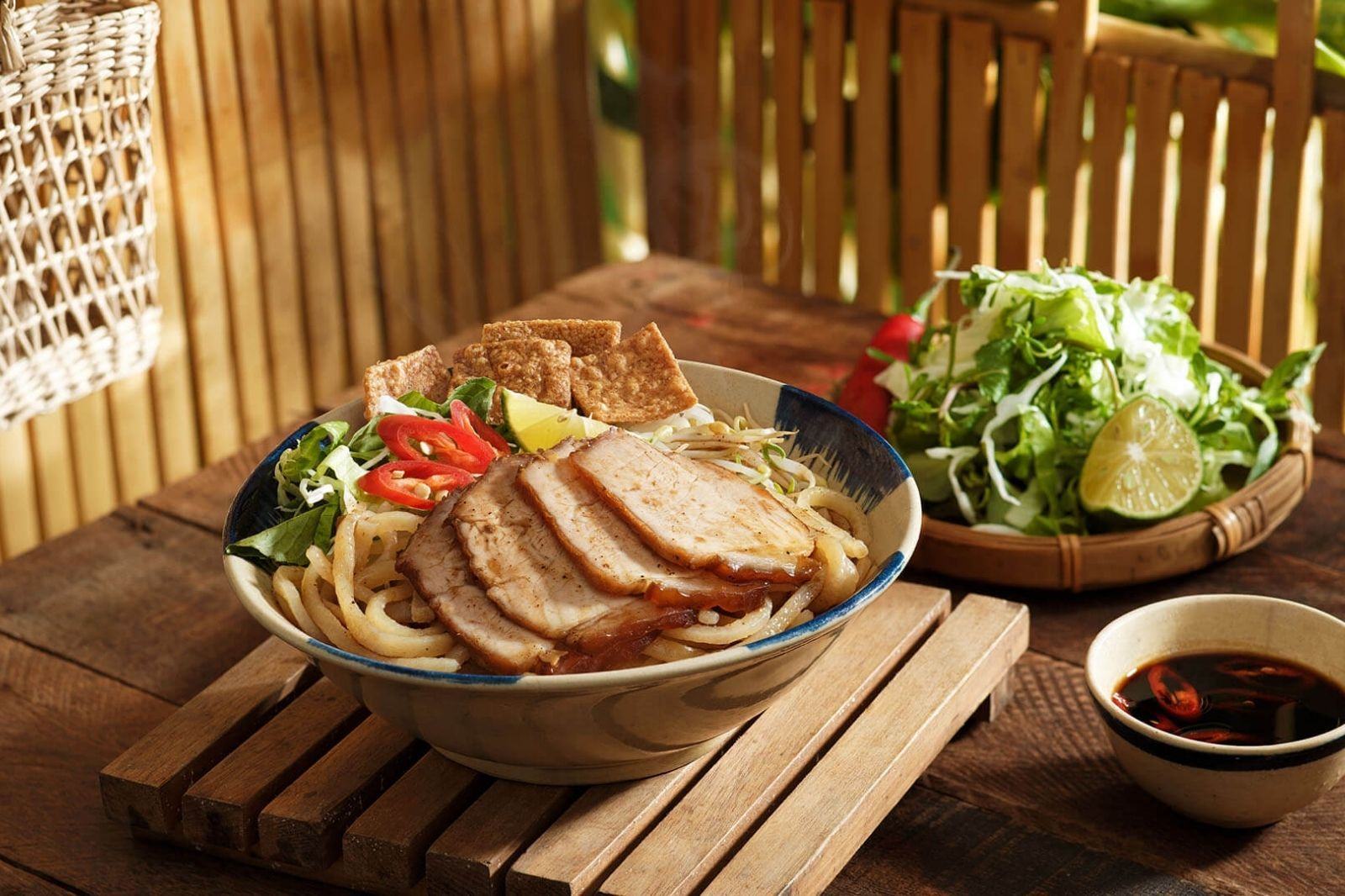
Mì Quảng and cao lầu may remind travellers of each other since both have noodles, topping, herbs, and aren't submerged in lots of broth. However, these are two distinct dishes, with different ways of making the noodles, different meat and different accompaniments. When in Hội An, trying both dishes at separate meals is more interesting than viewing one as a version of the other.
Compared with a bowl of noodle soup, mì Quảng usually gives you an experience more focused on the noodles and how the herbs, topping and rice crackers are combined. If you expect a bowl full of broth to sip, adjust that expectation before ordering; little broth does not mean the serving is incomplete.
You don't need to decide which dish is tastier. Cao lầu, mì Quảng and bún bò each have their own characteristics. Ordering by the right name and understanding how they're served makes your trip richer in experiences, rather than placing the dishes on a single scoring scale.
When looking at the menu, ask about the type of topping, the portion size and the accompaniments. If you want to add egg, meat or rice crackers, check the separate price. The price depends on location, the amount of topping and the shop; there is no single price representing the whole Quảng region.
Mì Quảng can suit many meals, but each shop's serving hours should be checked specifically. If you plan to travel far to eat, don't assume every shop sells all day. A phone call or reliable updated information can help you avoid arriving when the shop is already closed.
Observe how the shop keeps the topping, handles the herbs and uses clean utensils. A convenient location, clear ingredients and serving that suits your needs are practical criteria. A bowl to your taste doesn't necessarily come from the shop mentioned most online.
Peanuts, sesame, shrimp, fish and fish sauce are ingredients worth asking about depending on the type of topping, broth and accompaniments. Not every bowl has them all, but the dish name doesn't tell you whether what you need to avoid is absent.
If you're vegetarian, confirm the topping, the broth or topping broth, the seasonings and the cooking oil. Simply removing the meat from a regular bowl does not turn broth cooked with animal ingredients into a vegetarian dish.
Choose a shop that keeps utensils clean, separates raw from cooked food, and stores ingredients properly. Pay attention to both the cooked topping and the accompanying herbs. If you have a severe allergy, ask about the possibility of cross-contamination; removing peanuts or shrimp from the top of the bowl does not replace control in the kitchen.
No. You may encounter white or yellow noodles. The colour depends on how they're prepared, not the sole criterion for identifying the dish.
Not necessarily. A relatively small amount of broth is a familiar feature of the dish, helping to combine the noodles with the topping, herbs and rice crackers. If you want more broth, just ask whether the shop can serve some extra.
No. The ingredients depend on the type of topping and the shop; ask beforehand if you want to have or need to avoid egg.
No. You can eat it in between bites, break off a little at a time, or mix it as you like. Keeping part of it outside the bowl is an easy way to keep the crunch throughout the meal.
Keep a bit of the rice cracker outside the bowl to nibble on while it's still crispy. Once you're used to the noodles and the broth, try switching from chicken to shrimp and pork next time to notice the difference. A moderate bowl is more comfortable before your next leg of travel.
Please follow the community guidelines when sharing your opinion
No comments yet. Be the first to share.
Serious or repeated violations may result in a temporary or permanent account suspension.
Let the editors know what is wrong with this comment. Your name is not shown to anyone.
Not sure where to stop? Tell me your trip idea.
 Travel assistant
 Bé Bụi