Southwestern lẩu mắm: picking vegetables, ordering a pot, and enjoying it on a road trip
04-10-2026 22:51:07
MEMBER SUPPORT 0367 494 919 Send feedback by email
After a walking tour exploring Hanoi, sitting down in front of a hot pan of fish with scallions and dill is a pleasant change of pace. Chả cá Lã Vọng is not a dish you order in a rush and take along in the car: the fish, bún, herbs, roasted peanuts and dipping sauce are assembled little by little in your bowl, so you can find your own way to eat it to taste. If this is your first time trying it, knowing what a portion includes and how to use the pan at the table will make your stop more relaxed, without having to chase a list of famous restaurants.
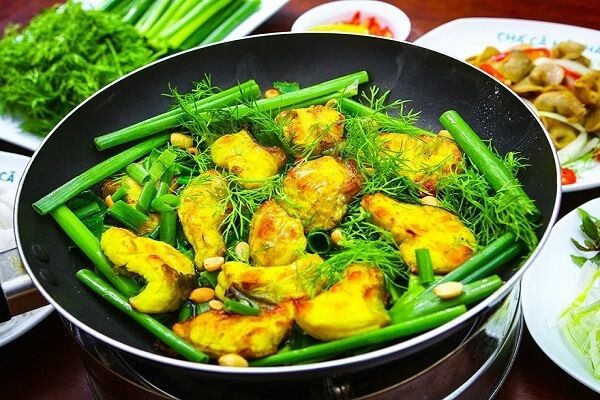
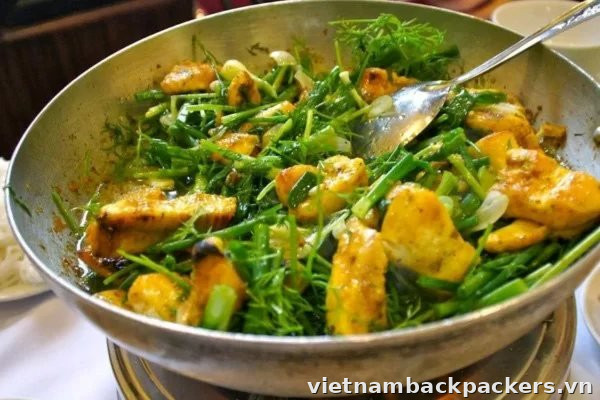 Fish: try a piece to notice the marinade flavor before dipping
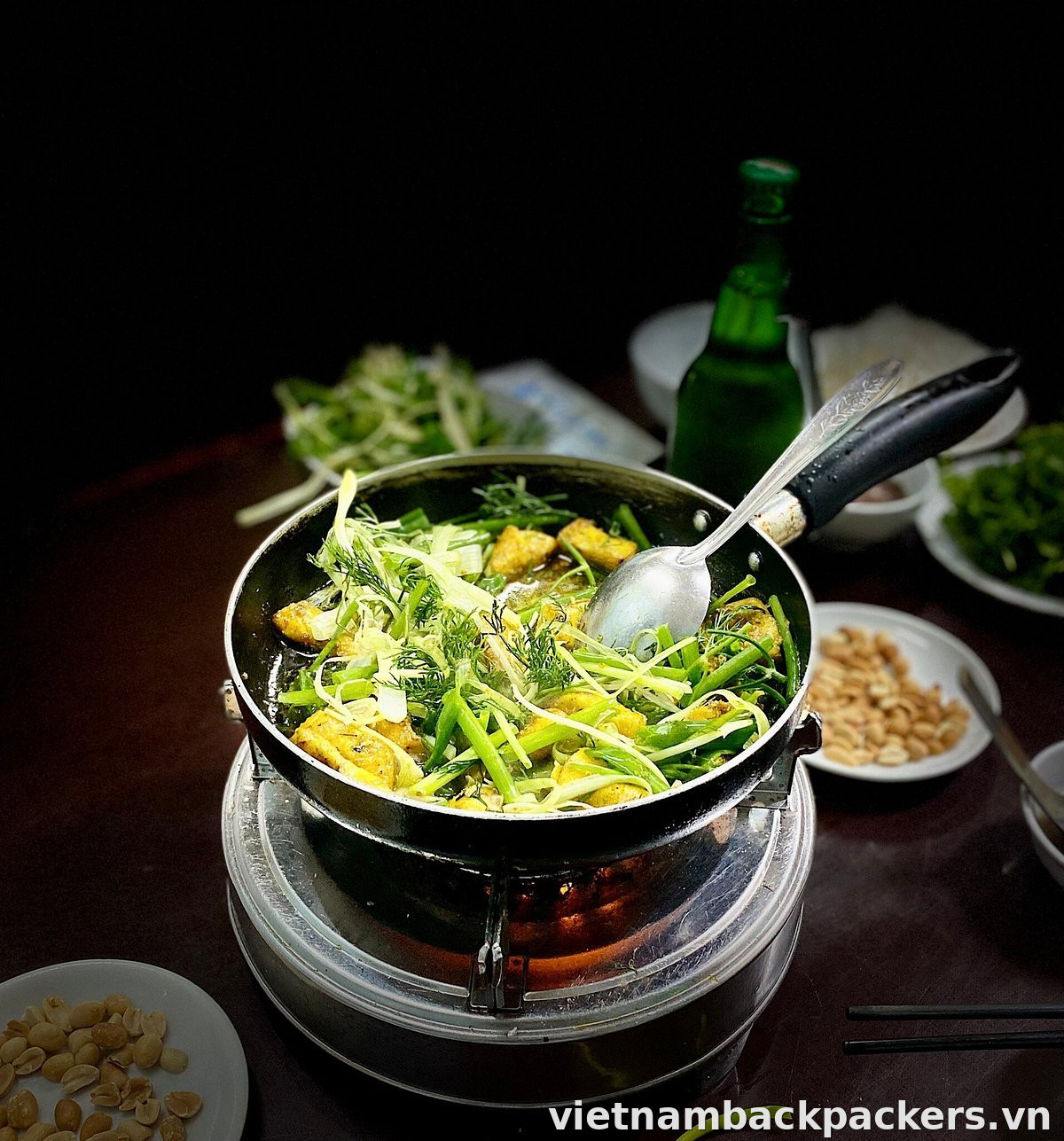 Spring onion and dill: add as instructed, keep the heat moderate
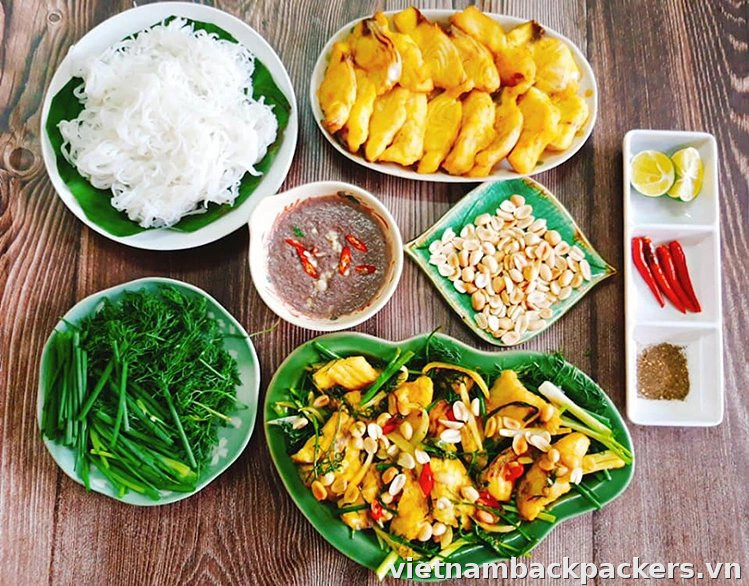 Noodles and peanuts: take a little at a time into your bowl, adjust to your appetite
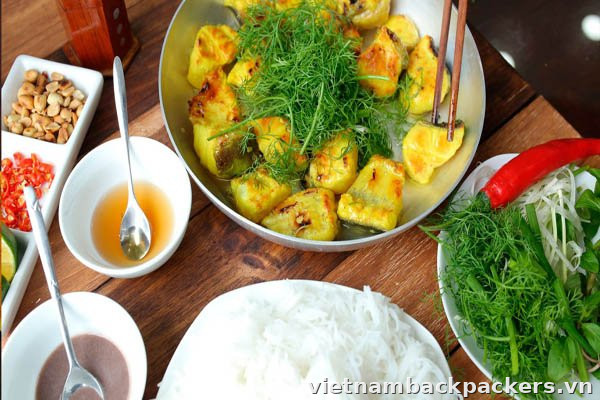 Dipping sauce: taste a little first, don't drench it from the start
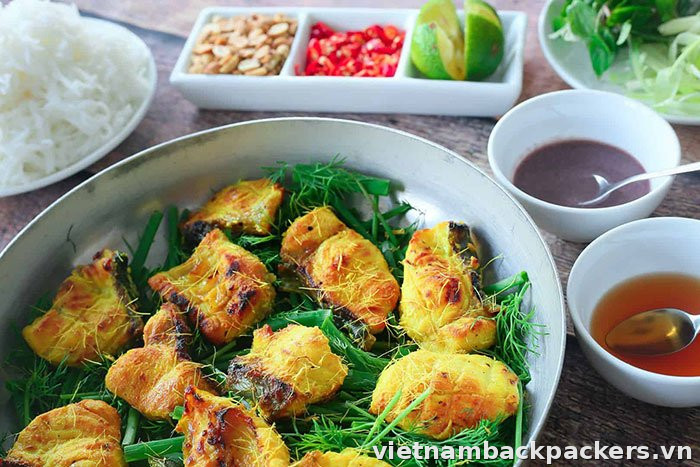 Portions: clarify how servings are counted and the price of extra items

The distinctive feature of this dish is the pieces of fish that keep their fibers intact, marinated with spices and then cooked, eaten hot with scallions and dill. The word “chả" here does not mean the fish is always ground into balls or cakes like many other chả cá dishes. When you pick up a piece, you still see the flesh separating into fibers rather than a springy mass of ground meat.
Turmeric gives the golden color, while galangal and mẻ add aroma and flavor to the marinated fish. The fish may be grilled first and then continue heating in the pan with oil or fat, scallions and dill. The preparation varies from place to place, but the combination of hot fish, aromatic herbs and the accompaniments is what makes it worth savoring.
The name chả cá Lã Vọng is tied to Hanoi cuisine and is also used when referring to fish prepared in this style. When planning your meals, you should distinguish the name of the dish from the name of a specific establishment. Not every sign with the words “chả cá" serves the same type of fish, the same marinade or the same portion size.
This dish suits a meal where you have time to sit rather than a hurried stop. The pan is kept hot, herbs are added gradually, and bún and dipping sauce are kept separate; each bite can differ a little. You don't need to try to eat to a single ratio: try the fish first, then adjust the bún, herbs and the strength of flavor in your own bowl.
Fish: cá lăng is a common choice, but some preparations use other fish. Just looking at the golden color or the size of the pieces cannot confirm the type of fish. If you care about richness, the skin or the bones, talk with the vendor about the portion being served rather than assuming every pan is the same.
Marinade spices: turmeric, galangal and mẻ create a flavor direction different from fried fish simply dipped in fish sauce. Some marinades also use mắm tôm, fish sauce and oil or fat. So the fish already has flavor before it reaches the table; changing the dipping sauce cannot alter the ingredients used in the marinade.
Scallions and dill: these are the standout aromatic herbs in the pan. Scallions have both white and green parts, and dill has a distinctive aroma that is easy to recognize when heated. When stir-tossed just enough, the herbs lend their aroma to the fish and add texture to each bite. If you don't like one of the two, saying so when ordering makes it easier to adjust than waiting until the pan has been mixed together.
Try a piece of fish with a little cooked herbs before adding lots of dipping sauce. This way helps you notice the marinade flavor and the tenderness of the fish, then decide how much salty, sour or spicy flavor you want to add. The hot pan can keep drying out the fish if kept on heat too long, so eat in small rounds and ask the server to adjust the heat when needed.
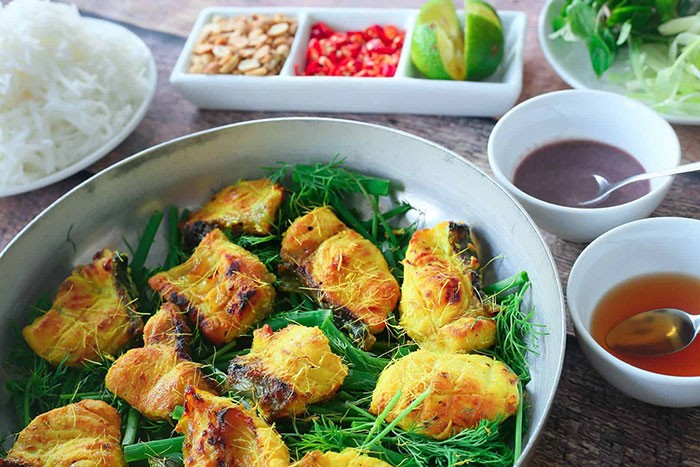
Bún makes the base for the heavily spiced fish, scallions and dill bring aroma, and roasted peanuts add a nutty flavor and crunch. The fresh herbs beyond the pan may be served separately. You don't have to put everything in on the first round; a little bún, a piece of fish and some herbs are enough to try the basic combination.
Mắm tôm is the kind of dipping sauce that usually goes with chả cá. The mix may include lime, sugar, chili or other ingredients, so the strength is not the same everywhere. If you're not used to it, dip a small amount onto a piece of fish or mix a little into your bowl and taste. Pouring a lot in at the start can let the mắm tôm overpower the fish and make it hard to adjust back.
If you don't like mắm tôm, you can ask whether there is mixed fish sauce or another kind of dipping sauce. This is a matter of taste, not automatically a solution for a shellfish allergy. The marinated fish may still contain mắm tôm; the cooking utensils and dipping sauces also need to be checked if you have a requirement to avoid this ingredient.
Peanuts should be added later to feel the crunch more clearly, rather than soaking long in a bowl with lots of dipping sauce. When dining in a group, keeping the peanuts and seasonings on a separate plate lets each person choose the amount they like. For people with allergies, you need to discuss both the preparation process and cross-contact, not just remove the plate of peanuts from the table.
Chả cá may be sold per serving, per portion or per shared pan. Before ordering, find out how much fish a portion includes and whether it comes with bún, herbs, peanuts and dipping sauce. The name “suất" does not guarantee every restaurant has the same amount of fish; a pan that looks large also doesn't tell you how many people the portion is for.
A concise ordering line could be: “There are two of us, does this portion already include enough bún and herbs, and how is extra fish charged?". Once you know how the portion is calculated, it's easier to decide to order just enough and add more if you're still hungry, rather than choosing a large pan right away out of fear it won't be enough.
If you still want to try another dish in the evening, balance the amount of fish and bún from the start. A chả cá meal already has oil or fat in the pan, so you don't need to order a lot to appreciate the dish. If you're with companions who have different tastes, sharing the fish but keeping the dipping sauce separate is easier than mixing the whole group into one shared bowl.
The dish may be served as a completed pan of fish or as a pan over a small stove to keep it hot at the table. When there's a stove, ask the server whether the fish is cooked, when to add herbs, and who adjusts the heat. Don't turn the heat up strongly just to make the pan boil faster; hot oil can splatter, herbs can burn and the fish can dry out.
Use the shared serving utensils for the pan, then use your own chopsticks to eat from your bowl. If the fish still has small bones, separate the piece and look before eating, especially when with children. Fillet does not mean there can be no bones left at all.
Not every restaurant lets diners toss the fish themselves; some have the server do it for you or bring out the already-cooked portion. Follow the way it's served there, no need to try to recreate a “ritual" from preview images. A pan kept at just the right heat and small bowls at a time will help you eat more leisurely.
Rather than fitting chả cá between two stops you have to rush to, give the dish a relatively comfortable break. You can choose lunch after a walk or dinner once you've put down your luggage. If you're riding a motorbike, find clear parking before going in to eat and don't place belongings right next to the stove on the table.
Start from the area you're staying in, look at the menu and how portions are priced, then choose a place on your route. Things worth observing are a tidy dining table, a clean serving area, a stove set stably at the table, and staff explaining the portion clearly. A crowd or a long-standing sign is no substitute for checking those conditions.
Prices vary by type of fish, portion and location. Budget based on the portion you intend to order along with the extra dishes on the current menu, don't apply a single price figure everywhere. If you're arriving close to closing time or in a large group, contact ahead to find out whether they're still serving and whether a suitable table can be arranged.
Chả cá can become a meal where you sit with your companions, not just a dish to check off as tried. When the meal is over, jot down a few lines about the fish, herbs and dipping sauce you liked. Those notes will help you order more confidently next time, whether you return to Hanoi or encounter a different preparation elsewhere.
Fish allergy: fish is the main ingredient, and there's no way to leave it out so the rest is automatically safe. When you need to avoid fish, choose another dish and discuss the shared utensils and cooking oil.
Shrimp or shellfish allergy: check both the fish marinade and the mắm tôm dipping sauce. Asking for a fish sauce substitute or removing the bowl of mắm tôm from the table is not enough to conclude the dish is suitable. If the vendor cannot confirm the ingredients or cannot avoid cross-contact, you should not try it on a hunch.
Peanut allergy: you need to determine whether peanuts are already added to the pan, the accompaniments or the dipping sauce. A request to add no peanuts must be discussed before the portion is prepared, along with a note about shared utensils.
Vegetarian or avoiding animal fat: fish and the various fermented sauces are not suitable for a vegetarian meal. For a request to avoid pork fat or chicken fat, ask about the marinating, grilling and reheating at the table too, because just looking at the oil in the pan cannot determine the ingredients.
Need food cooked thoroughly: state your request clearly to the server, don't just rely on the turmeric color or the browned surface of the fish to judge the inside. Lime, chili and dipping sauce also don't replace cooking the food thoroughly. If you're following a diet directed by a healthcare professional, prioritize your requirement over trying all the accompaniments.
It's not the usual ground-fish-cake style. The dish uses pieces of fish that are marinated, cooked, then eaten hot with spring onion and dill. When ordering, distinguish it from other fried or steamed fish cakes so you don't mistakenly order something other than what you want to try.
If you simply don't like the taste, you can ask for a different dipping sauce and try the fish with the greens and noodles. If you need to avoid shellfish ingredients due to an allergy, you should check the marinade and cross-contact; swapping the dipping sauce does not automatically make the fish portion suitable.
Cá lăng is a common choice, but the preparation may use other kinds of fish. If you want to know exactly what you're ordering, check the menu and ask the server. Don't identify the type of fish just from the yellow color of the pieces or the dish's name.
Check whether there is a single portion and whether there's a minimum order, then check whether noodles, greens and dipping sauce are included. Order just enough first and add more later if needed; don't assume a large pan is always the only option.
It depends on how it's served. Some places prepare the fish beforehand and use a stove to keep it hot, while others have staff toss the fish and greens for guests. Ask for instructions on the spot; don't assume the fish is cooked or turn up the heat yourself when unsure.
Chả cá suits a meal where you have time to sit down: the fish still hot, the spring onion and dill just right, with noodles and dipping sauce arranged in small bowls. Once you know how much the first portion fills you, decide whether to order more. Keep the pan and stove tidy on the table, especially when traveling with young children.
Please follow the community guidelines when sharing your opinion
No comments yet. Be the first to share.
Serious or repeated violations may result in a temporary or permanent account suspension.
Let the editors know what is wrong with this comment. Your name is not shown to anyone.
Not sure where to stop? Tell me your trip idea.
 Travel assistant
 Bé Bụi