Budget Domestic Flights: Baggage, Flight Times, and Fees
29/10/2026
MEMBER SUPPORT 0367 494 919 Send feedback by email
A warm and restful sleep deep in the forest or atop a mountain peak helps travellers recover their energy quickly after a long day of riding. Choosing a backpacking sleeping bag requires careful consideration of materials, temperature ratings, and packed dimensions to fit your luggage. Mastering how to pair it with a sleeping pad and maintaining it properly will keep your gear durable throughout every journey.
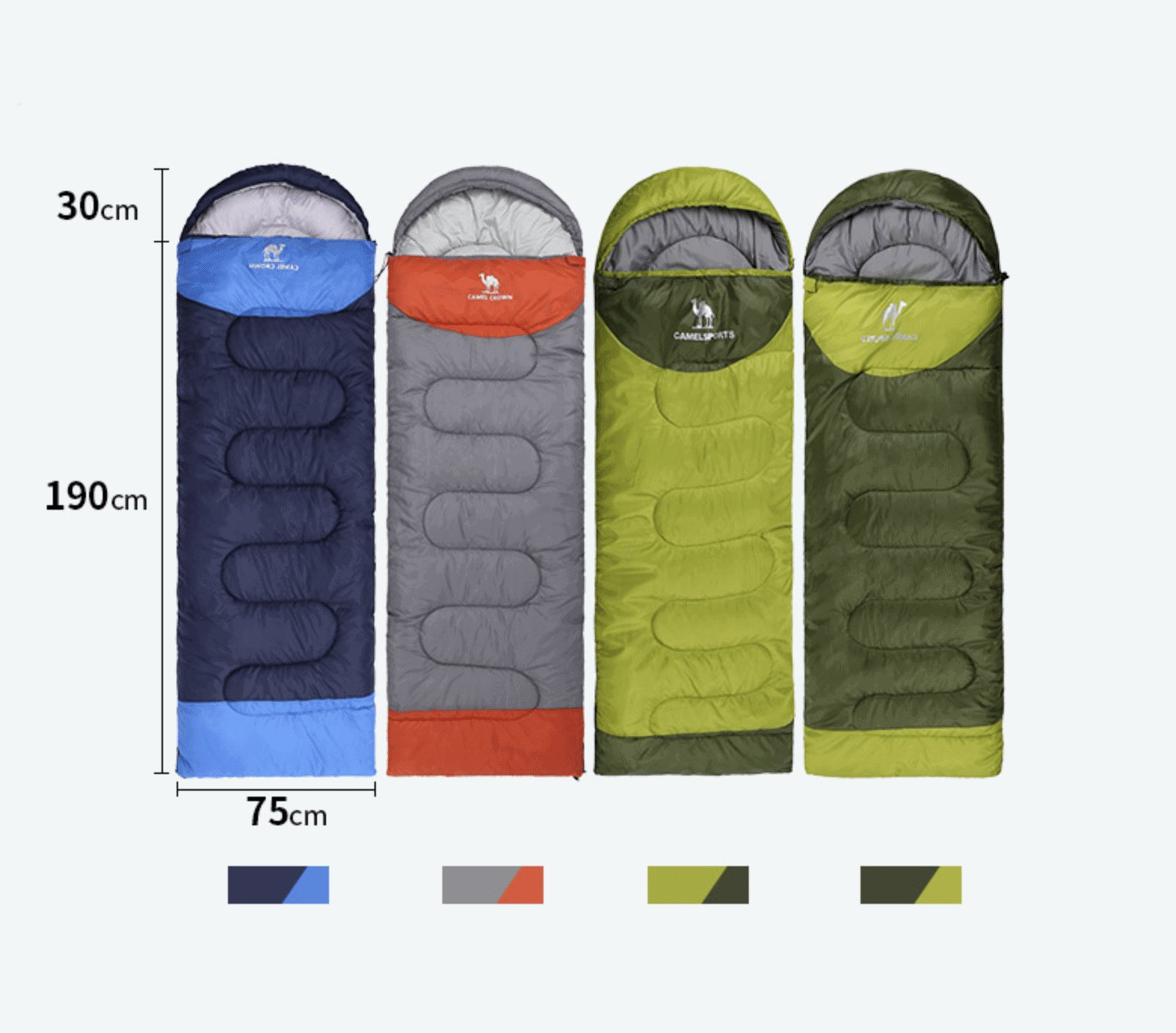
Choosing a sleeping bag for backpacking routes across Vietnam requires taking into account the characteristic high humidity of the tropics.
Down sleeping bags offer very light weight and impressive compressibility, but their warming performance drops noticeably when exposed to damp environments. Conversely, synthetic fill (polyester) resists moisture better, retains most of its warmth when damp, and dries faster, although it is heavier and bulkier than down at the same warmth rating. Synthetic bags are therefore a more practical and durable choice for actual weather conditions in Vietnam.
The local outdoor gear market categorizes sleeping bags into three main temperature groups for users to choose from.
When packing gear onto a motorbike, the volume and weight of your equipment are always a major consideration.
A single camping sleeping bag typically ranges in weight from 0.8 kg for summer models to 1.3 kg for winter ones. Once tightly rolled, packed dimensions generally fall between 18x40 cm and 20x42 cm. These dimensions are compact enough to strap onto the rear rack of a bike or pack neatly into the bottom of a backpack.
The shape of the bag directly determines comfort and packing space. The rectangular shape offers generous room to move, can be unzipped completely to serve as a quilt, or zipped together with another bag. The mummy shape is designed to fit closely around the body to maximize warmth retention and reduce packed size as much as possible.
When packing up, lay the sleeping bag flat and roll it tightly from the foot end up toward the open top. This pushes all trapped air out through the opening, forming a solid cylinder. After stuffing it into a dedicated compression sack, tighten the crisscross compression straps gradually and evenly to minimize volume without stressing the seams.
If strapping it outside your backpack, the optimal spot is the bottom straps or secured close to the pack's center of gravity. Avoid hanging the sleeping bag swinging loosely on the sides or perched too high on top, as this will hinder movement through narrow terrain and throw off your balance on long rides.
Many beginner campers mistakenly believe that a thick sleeping bag is enough to fight the cold. Sleeping bags work by trapping the heat generated by your own body. Lying directly on the cold ground allows ground moisture and cold to draw heat away very rapidly, leaving you chilled. An insulating sleeping pad is an indispensable accessory to block the direct transfer of cold from the ground to your body.
NoteNever sleep in a sleeping bag directly on damp ground without an underliner or insulating sleeping pad beneath it.
Proper cleaning after each camping trip prevents the sleeping bag from flattening and preserves its original loft and warmth.
Hand-washing in a bathtub or large basin is recommended to preserve the product's lifespan. Use cold or lukewarm water mixed with a small amount of mild detergent, soak the bag briefly, and gently stomp or knead soiled areas such as the collar and footbox.
NoteNever put a down sleeping bag in a washing machine unless explicitly permitted by the manufacturer, as this can easily cause clumping. Avoid dry cleaning entirely, as the chemical solvents will destroy the water-repellent coating and the fabric's heat-retention structure.
If using a tumble dryer, use only low heat and toss in 2 to 3 tennis balls to fluff up the inner synthetic fill or down feathers.
If the bag only has a few small dirty spots after a trip, use a soft-bristled toothbrush dampened with diluted soapy water to scrub gently, wipe clean with a wet towel, and let it air-dry naturally instead of washing the entire bag. When storing it at home for an extended period, do not keep it compressed in its stuff sack; hang it up or store it loosely in a mesh storage sack. Continuously folding the bag along the exact same crease lines over time will cause the insulation to lose its natural loft.
Synthetic sleeping bags handle moisture well, retain most of their warmth when damp, and dry faster, making them well suited to Vietnam's humid tropical weather, whereas down bags easily lose their insulating ability when wet.
A sleeping bag only retains heat generated by your body rather than producing heat itself; lying directly on the ground will quickly draw heat away, making an insulating pad an essential foundation beneath you.
Rectangular bags offer generous sleeping space and can be unzipped into a quilt or zipped together, while mummy bags hug the body for better heat retention and compress down smaller for travel.
Dry cleaning is not recommended because the cleaning chemicals used in the process will damage the water-resistant coating and degrade the insulating fiber structure of the bag.
Set the dryer to low heat and add 2–3 tennis balls into the drum so they bounce and break up clumps, restoring loft to the down fill.
Hang it up or let it lay loosely unfolded rather than keeping it tightly compressed in its stuff sack, and avoid folding it along the same crease lines repeatedly to prevent the insulation from packing down.
Sources: OpenStreetMap (ODbL), Wikipedia/Wikivoyage (CC BY-SA), Google Maps.
Please follow the community guidelines when sharing your opinion
No comments yet. Be the first to share.
Serious or repeated violations may result in a temporary or permanent account suspension.
Let the editors know what is wrong with this comment. Your name is not shown to anyone.
Ask me about your travel itinerary!
 Travel assistant
 Bé Bụi