
Mountain Pass Motorbike Riding Skills: How to Corner and Brake Safely for Backpackers
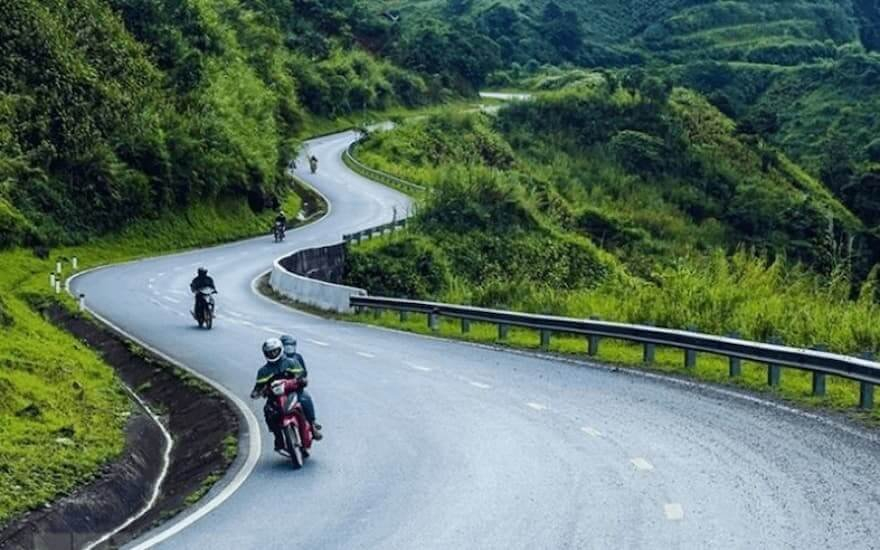
PrintConquering hairpin bends and winding slopes requires a steady hand and deep concentration. Mastering the skills of engine braking using gears and handling your brakes accurately will help you stay safe on every journey. Equipping yourself with emergency troubleshooting knowledge and understanding highland culture will make your trip even more fulfilling.
- Download offline maps for the area to travel (valid for 29 days)
- Save emergency contacts: 112, 113, 114, 115
- Check mechanical brake bite and tire condition before tackling passes
- Modest, polite clothing when passing through villages
- Phone with pre-saved emergency numbers
- Skills in speed control using low gears (gear 1, gear 2)
Strict Taboos
When Riding a Motorbike on Mountain Passes
Many beginner backpackers make the dangerous mistake of shifting into neutral (N) to let the motorbike coast freely in order to save fuel. This action disconnects the engine from the wheels, completely eliminating the engine brake's natural retarding force. All the pressure is shifted entirely onto the mechanical brakes, leading to overheating and brake failure.
The habit of suddenly grabbing the front brake also carries a very high risk of falling. Squeezing the front brake abruptly while cornering or on damp road surfaces can easily lock up the front wheel. The front end will skid out immediately, causing the rider to lose control entirely.
Common Risks and How to Avoid Them
Continuous descents subject the braking system to tremendous thermal stress. Brake failure occurs when the brake lever or foot pedal suddenly feels weightless, and the bike does not slow down at all even though the rider pulls the lever all the way to the handlebar. With brake jamming, the bike feels heavily bogged down, emits a burning smell, and produces unusual metallic noises from the wheel assembly.
When travelling alongside heavy trucks or passenger buses, their blind spots are deceptive hazards. You need to keep a safe distance and actively monitor the large vehicle's side mirrors ahead. Only when you can clearly see the driver's face in their mirror can they be aware of your presence.
TipAlways position your motorbike at an angle where you can see the truck driver's face through their side mirror.
First Aid and Emergency Technical Handling
If your motorbike suddenly loses its brakes midway down a slope, panicking will only make the situation worse. The rider needs to maintain a firm grip on the handlebars and downshift to the lowest gears, namely 1st or 2nd gear, to force the engine to rein in the speed.
Alongside engine braking, you should pump the brakes in short, intermittent pulses rather than gripping them rigidly. Quickly scan the road ahead and pick a flat roadside strip or a safe embankment to bring the bike to a halt.
Mobile Signal and Staying in Touch
Routes in remote and rural areas frequently pass through valleys with no mobile phone signal whatsoever. Before starting your engine and setting off, make sure to save the nationwide emergency numbers in your contacts. These numbers include 112 for emergency search and rescue, 113 for police, 114 for fire and explosion emergencies, and 115 for medical assistance.
Online navigation apps will stop working once your device loses network connectivity. You should pre-download the offline map of the area on Google Maps to your phone. Downloaded data remains valid for 29 days, but does not support motorbike-specific navigation and will not update real-time traffic conditions.
NoteOffline maps are only stored for 29 days and do not include motorbike navigation features.
Respecting Highland Indigenous Culture
Backpacking routes through villages offer many delightful encounters. When passing through living areas of ethnic minorities, you should dress modestly and respectfully to show consideration for local life.
If riding through the Hà Giang area (now part of Tuyên Quang), you need to pay close attention to the village entrance or the doorways of H'Mông and Dao homes. Any spot with a marked wooden post or a green leafy branch hanging from a high pole indicates that the family is observing a taboo ritual. Strangers seeing this sign must strictly refrain from entering.
Pre-departure Checklist
- Pre-download offline maps for your route onto your phone before departure day.
- Save emergency contacts: 112, 113, 114, and 115.
- Check the grip of your mechanical brakes and tire condition before heading up the pass.
- Watch for taboo signs such as green tree branches or marked posts in front of local gates.
Frequently Asked Questions
How do you tell if a motorbike has lost its brakes or has jammed brakes when going downhill?
Brake failure presents as a hand brake lever or foot pedal that feels completely limp, with the bike's speed not dropping even when fully pressed. Conversely, jammed brakes cause the engine to drag heavily, emit unusual noises from the brake assembly, and produce a burning smell.
What should you do if your motorbike loses its brakes halfway down a mountain pass?
You need to stay calm, shift down to the lowest gear (1st or 2nd) to slow down using engine braking, pump the brakes intermittently, and look for a safe roadside verge to stop the vehicle.
Why must you never shift into neutral (N) when descending steep mountain slopes?
Shifting into neutral disconnects the engine from the wheels, removing the motorbike's natural retarding force. This causes the bike to coast freely, overloading the mechanical brakes and easily leading to brake burn and failure.
How can a motorbike avoid falling into the blind spots of large trucks on mountain passes?
Motorbike riders need to maintain a riding position where they can see the truck driver's face reflected in their side-view mirror.
What are the limitations of offline Google Maps when backpacking in the highlands?
Downloaded maps are only saved for 29 days, do not support turn-by-turn navigation specifically for motorbikes, and do not show real-time traffic.
What does the sign of a green leafy branch hanging in front of an ethnic minority house in Hà Giang mean?
A bundle of green tree leaves hung on a high pole or a marked stake driven before the gate is a sign of ritual taboo among the H'Mông and Dao people; outsiders must never enter the house uninvited.
Sources: OpenStreetMap (ODbL), Wikipedia/Wikivoyage (CC BY-SA), Google Maps.
Members who reacted
Comments
Please follow the community guidelines when sharing your opinion
No comments yet. Be the first to share.
Comment guidelines | VietnamBackpackers
01 · Names and profile pictures
- Do not use offensive, confusing or promotional names or profile pictures.
- Registered names must not exceed 30 characters or contain links, phone numbers or email addresses.
02 · How to communicate
- Follow Vietnamese law and the community's standards of conduct.
- Do not use profanity, insults, derogatory language, defamation or personal attacks.
- Do not write entire comments in capitals. Base discussions on facts and respect differences.
03 · Information and content
- Do not post personal contact details, advertising links or commercial websites.
- Do not spam, copy content from other sources or spread misinformation.
- You are responsible for the content of your comments.
Serious or repeated violations may result in a temporary or permanent account suspension.
People who liked this
Report comment
Let the editors know what is wrong with this comment. Your name is not shown to anyone.
 Bé Bụi